

Fresh casino Plinko
Introduction
Plinko looks almost too simple to deserve a serious review. You choose a stake, set a risk level, drop a ball, and watch it bounce through a field of pegs until it lands in a payout slot. That is the entire visible structure. Yet in practice, Fresh casino Plinko creates a very specific kind of session that feels nothing like spinning a reel-based slot and nothing like playing table compare games options at Fresh Casino with fixed rules and slower decision cycles.
I have spent enough time studying crash titles, instant-win formats, and high-speed casino products to say this with confidence: Plinko attracts attention not because it is complicated, but because it compresses suspense into a few seconds. The visual path is easy to understand, while the actual outcome remains uncertain until the last moment. That contrast is the core of its appeal.
For players in Australia looking at Fresh casino Plinko, the real question is not whether the interface is easy to grasp. It is. The better question is what this game actually offers once the novelty wears off. Does it reward patience? Does strategy matter? How risky is it in real play? And who is likely to enjoy it beyond the first few rounds?
In this review, I will focus strictly on the Plinko experience itself: how the mechanics work, why the tempo feels so different from slots, where the pressure points are, and what a player should realistically expect before launching a session.
What Fresh casino Plinko is and why it stands out
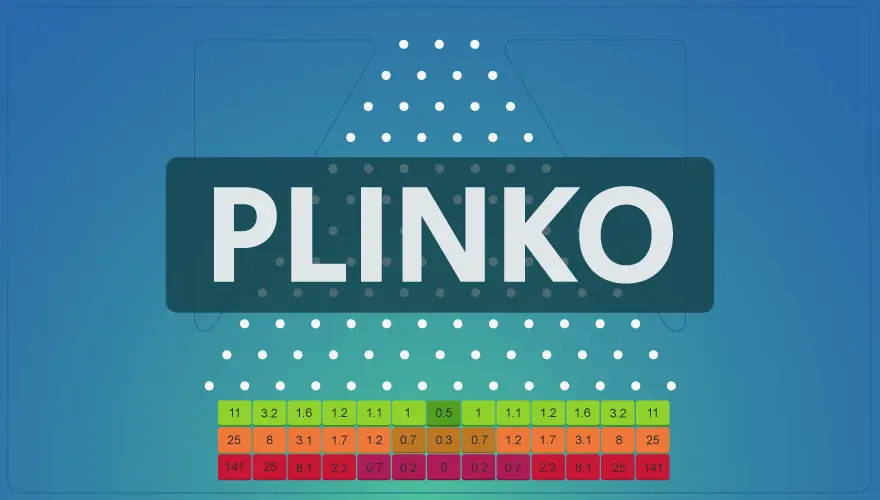
At its core, Plinko is an instant-style casino game built around a vertical board filled with pins. A ball drops from the top, collides with pegs on the way down, and eventually lands in one of several multiplier zones at the bottom. The final multiplier determines the result of the round.
That description sounds almost mechanical, but the reason Plinko became so noticeable is psychological as much as mathematical. It offers a clean visual story. You do not need to decode paylines, bonus symbols, scatter rules, or side bets. You see motion, deflection, and an ending. The simplicity lowers the entry barrier, which is why many players try Plinko much faster than they would try a dense slot with multiple layers of rules.
On Fresh casino, Plinko tends to catch attention for another reason: it gives the player immediate control over session style. In many versions, you can adjust stake size, choose between low, medium, or high risk, and sometimes alter row count. Those settings do not turn the game into a skill format, but they do change how results are distributed and how the session feels from minute to minute.
That matters. A lot of casino products look different on the surface but produce a similar emotional rhythm underneath. Plinko does not. Its rounds are short, outcomes are highly visible, and the gap between frequent modest returns and rare top multipliers is often much wider than new players expect.
One thing I find especially interesting is this: Plinko often feels more “fair” to inexperienced players simply because they can watch the path unfold. In reality, visibility is not the same as predictability. The ball’s journey creates a strong illusion that you are seeing logic in motion, while the actual result is still driven by the game’s underlying random model.
How the Plinko mechanics actually work
The visible mechanic is straightforward. You set your bet, choose a risk profile, and release a ball from the top of the board. As the ball touches each peg, it is redirected left or right until it reaches a payout segment. That segment carries a multiplier, which can range from a fraction of your stake to a very high number on rare outcomes.
What matters in practice is that the board is not just decoration. The shape of the payout table is tied to the game’s mathematical profile. In most Plinko variants, the central slots pay less but are hit more often, while the outer edges hold the largest multipliers and appear far less frequently. This creates a bell-like distribution in low-risk setups and a much sharper, harsher spread in high-risk mode. For a closer look at the games library, Fresh Casino Gates of Olympus slot page with bonus terms and account details sorts the titles by theme and pace.
Here is a simplified breakdown of the moving parts players usually deal with:
| Element | What it does | Why it matters in real play |
|---|---|---|
| Stake size | Sets the base value of each drop | Directly affects bankroll pressure because rounds are very fast |
| Risk level | Changes payout distribution | Low risk means steadier smaller returns; high risk means longer dry runs and bigger spikes |
| Rows | Alters the number of peg collisions before the final slot | Can change variance feel and top-end multiplier structure |
| Multiplier slots | Determine the return for each landing position | Show where the value is concentrated and how rare the best outcomes are |
| Auto play | Drops multiple balls automatically | Speeds up losses and gains alike, often more than players realize |
There is an important practical point here. Many players watch the ball hit several pegs in one direction and assume they are seeing momentum or pattern formation. They are not reading a meaningful trend. The board creates a visual sequence, but the result remains part of a randomised system with predefined probabilities and return structure. If you approach Fresh casino Plinko expecting to “read the board,” you will likely overestimate your control. If bonuses are what you care about, VIP program checklist breaks down every offer currently running.
That said, settings do matter. Risk level especially changes the entire personality of the session. Low risk usually compresses outcomes toward smaller multipliers, so the session can feel smoother and less punishing in the short term. High risk stretches the distribution. You may go through many low or losing outcomes before seeing a strong hit. The interface remains simple, but the bankroll experience changes dramatically.
Why the game feels so engaging and how its tempo works in practice
Plinko is built around short suspense cycles. The time between placing a stake and seeing the result is brief, but not instantaneous. That short travel time is crucial. It gives the round just enough drama to feel eventful without slowing the session down.
In my view, this is one of the main reasons the format works so well. Slots often create tension through symbol alignment, bonus anticipation, or long dry stretches between meaningful features. Plinko does it through repeated micro-moments. Every drop is a compact event with a visible route and a clear ending.
The rhythm can become intense surprisingly quickly. A player may start with the idea of testing a few balls and end up running dozens of rounds because each one resolves in seconds and invites an immediate retry. That makes bankroll discipline more important than it appears at first glance.
There is also a subtle emotional hook in the way near-misses are perceived. When the ball lands one or two slots away from a large multiplier, the result feels “close,” even though closeness on the board does not mean you were meaningfully closer in any predictive sense. This is one of the most memorable aspects of Plinko: it turns probability into a visual drama that feels personal.
Another observation worth noting: Plinko can feel calmer than a slot and more stressful than a slot at the same time. The screen is cleaner, the rules are lighter, and there are no layered bonus systems to track. But because each outcome is isolated and rapid, the emotional feedback is sharper. There is less noise, yet the tension lands harder.
How risky Plinko really is and who it suits best
Plinko can be mild or severe depending on settings, but it is never a low-attention product. Even in a softer configuration, the pace of rounds means results accumulate quickly. That alone makes it risky for players who tend to chase outcomes or increase stakes after a sequence of weak landings.
If you choose a high-risk setup, the experience changes from casual to volatile very fast. The attraction is obvious: top multipliers can be far higher than what many standard low-feature rounds in slots offer. The trade-off is that the path to those top returns is usually filled with small results, reduced returns, or long stretches that feel flat.
Plinko tends to suit players who enjoy:
- Fast rounds with immediate feedback.
- Simple controls without complex paytable study.
- Visible randomness rather than hidden reel calculations.
- Adjusting session style through risk settings.
It may be a poor fit for players who prefer:
- Long-form features, free spins, and layered bonus rounds.
- A stronger sense of narrative progression during play.
- Games where strategic decisions have a larger role.
- Slow bankroll consumption and longer decision windows.
The biggest mistake I see with Plinko is assuming that a simple interface means a gentle experience. In reality, the opposite can be true. Because the game is easy to understand, players often move too quickly into larger stakes or more aggressive settings before they have a feel for how cold a session can become.
What players should understand about probabilities and likely outcomes
Before playing Fresh casino Plinko, it helps to separate three ideas that are often blended together: visible movement, actual probability, and expected session value. The moving ball is what you see. The probability model is what determines how often different multipliers appear. The expected value is what shapes long-term return over many rounds.
Most Plinko boards are designed so that central outcomes occur more often than edge outcomes. This means the most dramatic multipliers are usually the least frequent. That sounds obvious, but many players still build expectations around isolated highlights rather than distribution reality.
Here is the practical version of that logic: A quick read of Fresh Casino Aviator crash game for new players answers most questions about limits and account settings.
| Session factor | What players often expect | What usually happens |
|---|---|---|
| High-risk mode | More exciting drops with better average returns | Much wider swings, rarer big hits, more uneven sessions |
| Repeated drops | A cold run should “correct itself” soon | Each round remains independent within the game model |
| Near-edge landings | The next ball may finally reach the top multiplier | Visual closeness does not create future advantage |
| Low-risk mode | Safe and consistently profitable | Smoother, but still subject to house edge and long-term loss expectation |
If I had to reduce Plinko advice to one sentence, it would be this: do not confuse a readable game with a beatable one. The board is transparent, but transparency of presentation does not remove variance or house edge.
For real sessions, this means setting a budget before you start, deciding whether you want a steadier or more aggressive profile, and resisting the urge to interpret clusters of outcomes as signals. Plinko can produce streaky sequences that feel meaningful. Usually they are not.
How Plinko differs from slots and other casino formats
The easiest comparison is with classic online slots, because many players arrive at Plinko from a slot lobby. The difference is immediate. Slots revolve around reels, symbol combinations, bonus triggers, and often a slower build toward standout moments. Plinko strips all of that away. There are no expanding wilds, no free spin packages, no multi-step bonus ladders. The entire round is condensed into one drop and one landing point.
This changes the player experience in several ways:
First, Plinko is easier to parse at a glance. You do not need to learn a paytable full of symbol values. Second, the emotional rhythm is more repetitive but more concentrated. Third, the player has fewer “false layers” to focus on. In slots, there can be a lot happening on screen that does not materially improve the round. Plinko is more honest visually. If the multiplier is not there, it is not there.
Compared with roulette checklist, Plinko shares a similar attraction to probability distribution, but the presentation is more animated and less abstract. Compared with blackjack, it offers far less decision depth. Compared with crash games, it removes timing pressure but keeps short-round intensity.
This is why Plinko sits in an interesting middle ground. It is not strategic enough for players who want meaningful decision-making, and it is not content-rich enough for players who love feature-heavy entertainment. But for players who want quick, legible, high-feedback rounds, it can be a strong fit.
A memorable distinction is this: slots often ask, “Will this spin open into something bigger?” Plinko asks, “Where will this one moment end?” That difference sounds small, but it changes the entire mood of play.
Practical strengths and weak points of Fresh casino Plinko
Every game format has trade-offs, and Plinko is no exception. Its strongest qualities are clear, but so are its limits.
- Strong accessibility: almost anyone can understand the round structure within seconds.
- Fast session flow: ideal for players who do not want long setup time between results.
- Risk customisation: low, medium, and high settings can meaningfully change the feel of play.
- Clean visual logic: the outcome path is easy to follow, which makes the experience feel direct.
Those are genuine advantages, not marketing slogans. But they come with equally real limitations.
- Limited depth: once you understand the board and the settings, there is not much hidden complexity left to discover.
- High potential turnover: because rounds are fast, bankroll can disappear quicker than expected.
- Illusion of pattern: the visible bounce path can tempt players into reading meaning where there is none.
- Session fatigue: the format can become repetitive for players who want evolving features or narrative progression.
On Fresh casino, this means Plinko works best when approached as a focused, short-form product rather than a long immersive session. It is excellent for players who appreciate directness. It is less convincing for those who need variety inside the round structure itself.
One more point deserves attention. The game’s strongest visual quality is also one of its most misleading. Because you can watch every bounce, losses can feel less arbitrary than they really are. That can make players stay longer than intended, not because the results are better, but because the presentation feels more transparent and therefore more manageable.
What to check before starting a Plinko session
Before launching Fresh casino Plinko, I recommend taking a minute to assess the version you are about to play rather than jumping straight into auto mode. Small configuration choices can change the session more than many players expect.
- Check the risk setting first. This is the single biggest factor shaping your experience.
- Look at the multiplier spread. Do not focus only on the top number; examine how much of the board pays low values.
- Set a session limit. Fast rounds can distort your sense of spend.
- Use demo mode if available. Not to “beat” the game, but to understand its tempo and distribution feel.
- Be careful with auto play. Convenience can remove the pause that normally helps control decisions.
For Australian players in particular, the practical value of this approach is simple: it helps you decide whether Plinko fits your style before real money pressure enters the picture. Some players discover quickly that they enjoy the clean pace and direct structure. Others realise just as quickly that they miss the layered texture of slots or the decision element of card-based games.
If you are testing the game for the first time, low or medium risk is usually the better starting point. Not because it guarantees better outcomes, but because it lets you observe the board’s rhythm without exposing your bankroll to the sharpest swings immediately. Anyone stuck on account verification can follow the steps laid out in compare Fresh Casino welcome bonus before signing up.
Final verdict on Fresh casino Plinko
Fresh casino Plinko offers a very specific casino experience: short rounds, visible randomness, adjustable intensity, and a gameplay loop that is easier to understand than most slot products. Its strongest selling point is not novelty alone. It is clarity. You always know what is happening on screen, and that directness is a real advantage in a market crowded with overdesigned interfaces.
At the same time, players should not mistake simplicity for softness. Plinko can be harsh, especially in high-risk mode, and the speed of play can magnify both excitement and losses. The game rewards self-control more than it rewards interpretation. You are not reading a board or building an edge. You are choosing a volatility profile and accepting the distribution that comes with it.
Who is it for? I would recommend Plinko to players who enjoy compact suspense, fast feedback, and a cleaner alternative to feature-heavy slots. I would be more cautious recommending it to players who want strategic depth, slower pacing, or a longer-form entertainment arc inside each session.
In the end, Plinko is not trying to be everything. It offers a focused format built on motion, tension, and probability. If that combination appeals to you, Fresh casino Plinko is worth trying with clear limits and realistic expectations. If you need richer progression or more decision-making, another casino format will probably suit you better.
FAQ
What should be checked before starting a Plinko round with real-money play?
Confirm the stake size, review the game rules shown on the game panel, and make sure the chosen mode is set to real-money play. It also helps to verify session limits in the casino before placing bets.
How does the ball drop work in Plinko, and what determines the multiplier?
A ball drops from the top and bounces through the pegs until it lands in one of the multiplier slots. The multiplier is determined by the slot where the ball finishes, so every drop outcome can differ even with the same stake.
Is there a volatility or risk level for Plinko, and how does it affect play?
Volatility in Plinko reflects how frequently wins may appear and how large the swings can be between results. Higher-risk settings typically mean bigger variations over time, so adjusting stake and pacing matters.
If a promo code is entered but the free spins do not trigger, what should be checked?
Check that the code was applied successfully and that the bonus status reads as active. Many offers require a specific deposit or account condition, so review the bonus terms shown next to the promo. Also confirm the bet is placed in the correct game mode and game lobby.
What happens if login times out while trying to launch Plinko?
A session timeout will prevent real-money play from starting. Log back in through the casino login form, then open the Plinko game again and verify that the game mode is still set correctly.